
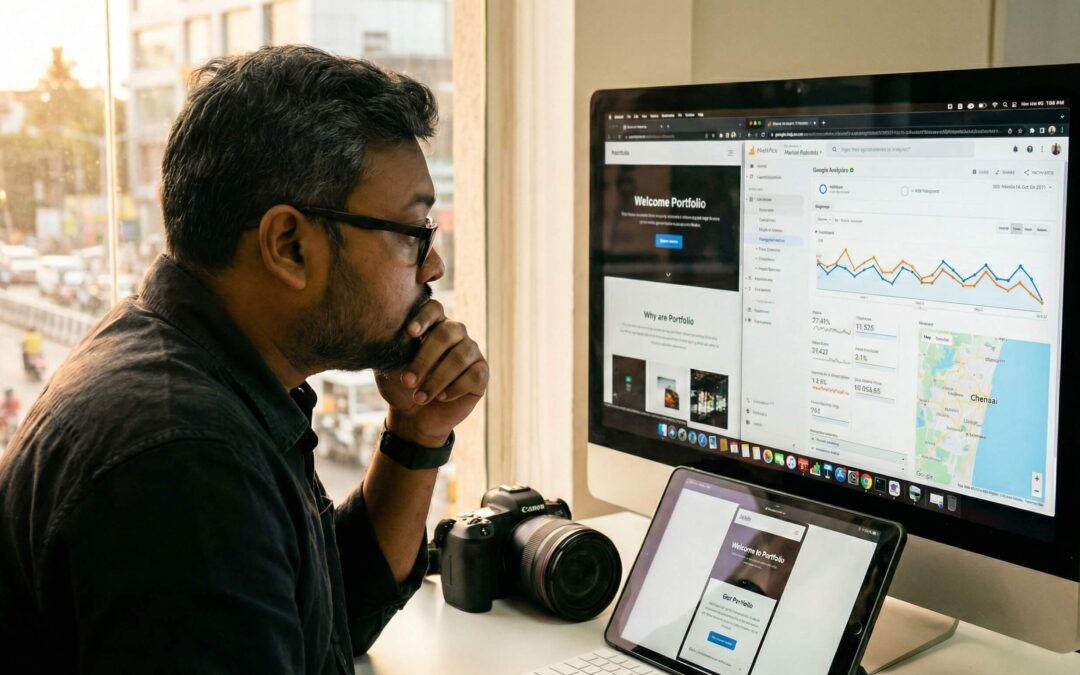
Welcome back to the C & T Fotography blog. Have you ever searched online for a local business and instantly clicked away because their website was incredibly slow or completely visually unappealing? As the dedicated founder of C & T Fotography, I heavily understand this exact digital frustration. Being the best photographer in Chennai is truly only one piece of the massive puzzle. The best photographer in Chennai completely knows that premium visual art absolutely needs a highly functional beautiful digital home. In this comprehensive guide, I will proudly share exactly how the best photographer in Chennai perfectly uses premium web design and stunning original photos to completely dominate local search results and build massive consumer trust.
Contents
- 1 The First Impression and Digital Bounce Rates
- 2 Why Local Search Heavily Relies on Good Web Design
- 3 How the Best Photographer in Chennai Optimizes Images
- 4 Building Brand Authority Through Consistent Visuals
- 5 The Analytical Approach to Digital Dominance
- 6 Combining Art and Data for Total Success
- 7 Your Next Step Toward Local Visibility
The First Impression and Digital Bounce Rates
When a curious visitor lands on your official website, you have less than a single second to capture their total attention. The best photographer in Chennai perfectly understands that striking premium photography acts as an incredibly powerful visual hook. However, if those highly gorgeous images are placed on a poorly designed messy website, the visitor will instantly leave. This quick exit is called a digital bounce. The best photographer in Chennai completely knows that high bounce rates directly tell Google your website is absolutely not helpful to users. To learn exactly how fast these crucial visual judgments happen online, you can read my detailed personal insights.
Why Local Search Heavily Relies on Good Web Design
Local SEO is exactly how your business is actively discovered by eager people right here in our beautiful vibrant city. The best photographer in Chennai actively uses modern intuitive web design to build massive local digital authority. Major search engines heavily reward websites that load incredibly fast and are completely mobile friendly. The best photographer in Chennai perfectly ensures that every single pixel is flawlessly optimized for small mobile screens. If you want to clearly see a prime example of a highly optimized digital portfolio that ranks well, please actively explore our professional corporate offerings right here.
How the Best Photographer in Chennai Optimizes Images
Search engines cannot actually magically see your beautiful photographs. They only read the specific hidden text attached to your digital image files. The best photographer in Chennai expertly uses highly strategic hidden alt text and cleverly names every single image file to heavily boost local search rankings. When someone actively searches for the best photographer in Chennai, they easily find this exact website because of that highly meticulous technical preparation. The best photographer in Chennai completely marries breathtaking creative art with highly strict logical data science to ensure total digital visibility.
Building Brand Authority Through Consistent Visuals
Deep trust is the absolute ultimate currency in the modern digital world. The best photographer in Chennai actively builds massive deep trust by maintaining a beautifully cohesive brand identity across every single online platform. From your highly engaging social media profiles to your premium corporate website, your specific visual story must remain totally consistent. The best photographer in Chennai expertly crafts this unified beautiful language. I recently wrote a highly detailed piece exploring exactly how modern visual strategy completely bridges the gap between local businesses and consumers. You can easily find that specific post to read right here.
The Analytical Approach to Digital Dominance
You might deeply wonder how highly technical SEO perfectly blends with creative emotional photography. Before fully dedicating my professional life to C & T Fotography, I proudly spent over eight long years strictly working as a highly senior research analyst. The best photographer in Chennai actively uses this exact same rigorous analytical mindset to deeply study local search trends and flawlessly execute complex web design projects. The best photographer in Chennai leaves absolutely nothing to wild blind chance. If you want to read much more about my highly extensive professional background and data driven approach, please connect with me directly on my professional network.
Combining Art and Data for Total Success
Truly succeeding in 2026 requires a highly holistic comprehensive digital approach. You actively need the deep fundamental basics of premium photography perfectly married with intuitive web design and smart local SEO. The best photographer in Chennai brilliantly brings all these highly vital elements completely together into one totally powerful unified strategy. Your local brand absolutely deserves to be seen and trusted by your local audience. I proudly published an extensive thought piece exactly on this fascinating topic of building deep brand authority. You can easily explore my deep personal insights by reading my dedicated article.
Your Next Step Toward Local Visibility
At C & T Fotography, we are highly incredibly passionate about delivering this exact complete digital excellence. The best photographer in Chennai is totally completely ready to actively help you totally transform your online presence and beautifully share your unique personal story with the entire digital world. Finding the best photographer in Chennai truly means finding a highly dedicated creative partner who deeply cares about your absolute ultimate success. If you are completely ready to finally start actively dominating your local search results with premium visuals and smart web design, please feel completely free to deeply connect with our dedicated creative team today.